Sauces & Condiments
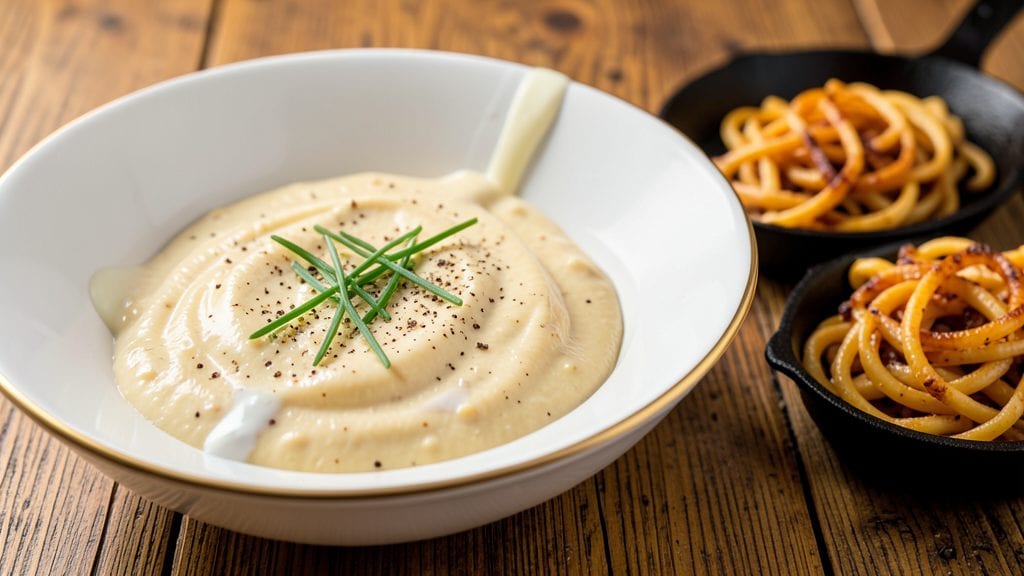
Creating the perfect Campbell's-style cheese sauce from scratch is easier than you think, and this ultra-smooth, no-lump recipe delivers restaurant-quality results every time. The secret lies in precise technique and patience—no fancy equipment required.
I’ve perfected this method after years of testing, and it works flawlessly for mac and cheese, casseroles, or dipping vegetables.
This recipe uses simple ingredients you likely already have: milk, butter, flour, and sharp cheddar cheese. The key is making a proper roux (butter and flour cooked together) to create a stable base that prevents lumps and holds the cheese beautifully.
The sauce comes together in just 10 minutes, but the technique ensures it stays creamy and lump-free even when reheated.
What you’ll end up with is a velvety, golden cheese sauce that coats every noodle or vegetable perfectly. The texture is rich and smooth, with a subtle tang from the cheese that makes it irresistible.
Whether you’re covering mac and cheese, topping baked potatoes, or dipping steamed veggies, this sauce elevates everything it touches.
Best of all, this recipe scales effortlessly—double or triple the batch for family gatherings or meal prep. The sauce keeps well in the fridge for up to 5 days, making it a go-to for quick, comforting meals. Let’s get started on creating your perfect cheese sauce!
Ingredients for campbell's cheese sauce
Pantry staples transform into velvety, no-lump cheese sauce magic—no Campbell's needed.
| Ingredient | Amount | Notes |
|---|---|---|
| Unsalted Butter 🧈 | ½ cup | Cold, cubed for even cooking |
| All-Purpose Flour 🌾 | ½ cup | White or whole wheat |
| Whole Milk 🥛 | 2 cups | Full-fat for creaminess |
| Sharp Cheddar Cheese 🧀 | 2 cups | Freshly grated, block preferred |
| Heavy Cream 🥛 | ¼ cup | Optional for extra richness |
| Salt 🧂 | ½ tsp | Kosher or sea salt |
| Ground Black Pepper 🌶️ | ¼ tsp | Freshly ground preferred |
| Garlic Powder 🧄 | ¼ tsp | For subtle depth |
| Mustard Powder 🌶️ | ¼ tsp | Brightens the sauce |
| White Vinegar 🍶 | 1 tbsp | Prevents scalding |
The butter and flour combo is your secret weapon. Cold, cubed butter (not melted) creates a smoother roux—no lumps, ever. Bob's Red Mill flour works best for its fine texture, but any all-purpose will do. Sharp cheddar is non-negotiable here—Kraft Singles won't cut it. Grab a block, grate it yourself, and store the rest in the freezer for future sauces. The milk? Whole milk gives the best creaminess, but 2% works in a pinch. For extra richness, the heavy cream is optional but worth it—trust me, it makes all the difference.
No sharp cheddar? Pepper jack or Gouda add different flavors but still work beautifully. Running short on butter? Olive oil at half the amount keeps things creamy (though it'll taste slightly different). The white vinegar might seem odd, but it's key—just a splash prevents the cheese from curdling when it hits the hot roux. Want to skip the garlic powder? Fresh minced garlic at double the amount gives a more robust flavor. And if you're making this for a crowd, double everything—it scales perfectly. The sauce gets even better the next day, so make extra for leftovers.
This sauce keeps like a dream. Store in an airtight container in the fridge for up to 5 days, or freeze for 3 months. For freezing, portion into ice cube trays first—just pop out what you need later. Reheat gently on the stove or microwave until just warm (it'll thicken as it cools). Pro tip: Add a splash of milk when reheating if it gets too thick. The perfect cheese sauce for mac and cheese, baked potatoes, or dipping veggies—game changer every time.
Why You'll Love This Recipe
- No-Fuss Roux Magic: I swear by this three-step roux—melt butter, whisk in flour, stir until golden—because it’s where the sauce gets its real depth. No fancy techniques, just patience and a wooden spoon. (Yes, even if you burn the first one—we’ve all been there.)
- Sharp Cheddar Obsession: That moment when you fold in grated sharp cheddar and heavy cream? Chef’s kiss. The sauce goes from creamy to ridiculously rich, with just enough tang to cut through buttery goodness. (I keep a block of cheddar in the fridge just for this.)
- Mac & Cheese MVP: But honestly? This sauce is my go-to for so much more than mac—drizzled over roasted broccoli, baked potatoes, or even as a dip for garlic bread. The same pot, same effort, endless uses. (My kids beg for it on Tuesdays, no joke.)
- Budget-Friendly Luxury: A single batch costs me less than takeout but feels like a restaurant dish. The milk and butter stretch far, and I can freeze leftovers for lazy mornings or last-minute casseroles. (Pro tip: Add a splash of milk to thawed sauce—no lumps!)
Step-by-step instructions for ultra-smooth cheese sauce
This foolproof method guarantees velvety, lump-free perfection every single time.
Melt the Butter and Whisk in Flour
In a medium saucepan, melt the 0.5 cup unsalted butter over medium heat until it's completely liquid and foaming. Watch closely—you want it to bubble gently but not brown. Once melted, reduce the heat to medium-low and immediately whisk in the 0.5 cup all-purpose flour until smooth.
This creates a roux that will form the base of your sauce. Stir constantly for 1-2 minutes until the mixture turns a pale golden color and smells nutty. The flour needs to cook off its raw taste completely—this is your first critical checkpoint. If you see any brown spots developing, reduce the heat immediately to prevent burning, which will make your sauce taste bitter.
Slowly Add Milk and Vinegar
Gradually pour in the 2 cups whole milk while whisking vigorously to prevent lumps. Start with a slow, steady stream—about 1 tablespoon at a time—letting each addition blend completely before adding more. After all the milk is incorporated, whisk in the 1 tablespoon white vinegar.
The vinegar acts as a stabilizer, preventing the sauce from curdling as it heats. Keep whisking continuously for 3-4 minutes until the mixture thickens noticeably. You'll see it transform from a thin liquid to a glossy, creamy consistency. This slow cooking process is what creates that restaurant-quality smoothness we're after.
Incorporate Cheese and Seasonings
Lower the heat to low and begin adding the 2 cups sharp cheddar cheese, a little at a time. Stir constantly until each addition melts completely before adding more. This gradual approach prevents clumping and ensures every bite is perfectly cheesy. Once all the cheese is incorporated, whisk in the 0.25 cup heavy cream, 0.5 teaspoon salt, 0.25 teaspoon ground black pepper, 0.25 teaspoon garlic powder, and 0.25 teaspoon mustard powder.
The mustard powder might seem like a small amount, but it brightens the whole sauce and cuts through the richness. Taste as you go—this is your chance to adjust seasoning before the sauce thickens further. If it needs more salt, add it now; once the sauce reaches its final consistency, it's harder to fix.
Simmer Until Thick and Glossy
Continue cooking on low heat for 5-7 minutes, stirring frequently, until the sauce reaches your desired thickness. It should coat the back of a spoon smoothly and have a beautiful, glossy sheen. For mac and cheese, aim for a consistency that clings to noodles but isn't so thick it becomes gluey.
Here's the pro tip: If the sauce starts to separate or looks too thick, whisk in 1-2 tablespoons of milk at a time until it smooths out. The sauce should be hot but not boiling—constant gentle heat is key to maintaining that silky texture. Remove from heat just as it reaches perfect consistency, because it will continue thickening slightly as it sits.
Use Immediately or Store Properly
For best results, use your cheese sauce immediately over hot macaroni, baked potatoes, or as a dip for vegetables. The sauce will continue to thicken as it sits, so don't make it too far ahead of time. If you need to store it, let it cool slightly, then transfer to an airtight container. It will keep in the refrigerator for up to 5 days, but for best texture, reheat gently on the stove, adding a splash of milk if needed to restore smoothness.
This sauce is incredibly versatile—try it over grilled cheese sandwiches, broccoli, or even tacos for a creamy twist. The secret to its success lies in the slow, steady cooking and constant whisking. Once you master this technique, you'll never buy boxed cheese sauce again!
Pro Tips For Making Campbell'S Cheese Sauce
- Melt Cheese Slowly: DESCRIPTION: Add the cheddar in small batches—about ¼ cup at a time—while stirring constantly. I learned this the hard way: dumping it all in at once turns the sauce grainy, no matter how much you whisk after.
- Whisk Like You Mean It: DESCRIPTION: Use a wire whisk, not a spoon, and keep it moving when you add the milk. The first few minutes are when lumps form if you’re not aggressive—don’t let the roux sit idle even for 10 seconds.
- Salt the Butter First: DESCRIPTION: Toss in ½ teaspoon of salt with the butter before melting it. The cheese sauce will taste flatter if you wait until the end, and you’ll end up guessing how much to add later.
- Finish with Cream: DESCRIPTION: Stir in the heavy cream last, just before serving, to keep the sauce rich but not overly thick. If you add it too early, the heat can break it down and make the sauce separate.
Troubleshooting perfect results
Lumpy Sauce Fix
If your sauce develops lumps, don't panic—this happens when cheese melts too quickly or milk adds too fast. Immediately whisk in 1-2 tablespoons of cold milk while stirring vigorously over low heat.
If lumps persist, strain the sauce through a fine-mesh sieve for ultra-smooth perfection. The key is patience—never let the sauce boil, as this accelerates lump formation. 💡
Grainy Texture
A grainy texture usually means your cheese wasn't fully melted or you used pre-shredded cheese (which contains anti-caking agents). For best results, always grate your own cheese using a box grater or food processor.
If using pre-shredded, pulse it in a food processor first to break up clumps. Also ensure your heat stays low to medium-low—high heat burns the roux and causes separation.
Sauce Too Thin
If your sauce is too thin, simmer it uncovered for 2-3 additional minutes to evaporate excess moisture. For instant thickening, mix 1 tablespoon cornstarch with 1 tablespoon cold water, then whisk into the sauce while heating.
Alternatively, stir in 1 tablespoon all-purpose flour and cook for 1 more minute. Never add more cheese—it'll make the sauce greasy rather than thicken it.
Cheese Separation
Separation occurs when the sauce overheats or sits too long off the heat. To fix it, whisk in 1 tablespoon cold milk or heavy cream while stirring constantly.
For prevention, keep the sauce at 180-190°F—never let it boil. If the sauce curdles, strain it immediately through a fine-mesh sieve to salvage the smooth base underneath.
Burnt Roux
A burnt roux happens when you walk away from the pan or use too high heat. If this occurs, immediately remove the pan from heat and whisk in 1 tablespoon milk to cool it down.
Then, return to low heat and continue with the recipe. To prevent this, always stir constantly and keep the heat at medium-low during roux formation. A nutty aroma signals readiness—never let it brown.
Sauce Too Thick
If your sauce becomes too thick, whisk in 1-2 tablespoons of warm milk gradually until it reaches the desired consistency. For mac and cheese, aim for a sauce that coats the back of a spoon but still flows smoothly.
Avoid adding too much liquid at once—it's easier to fix an over-thickened sauce than one that's too thin. Always taste as you go to adjust seasoning before the sauce thickens further. 🌟
Nutrition facts
Frequently asked questions
Can I make this cheese sauce without a whisk?
Yes! If you don't have a whisk, use a sturdy spoon or silicone spatula to stir continuously in a figure-8 motion. The key is constant stirring to prevent lumps—just move faster when adding milk or cheese. For extra insurance, blend the sauce briefly with an immersion blender after all ingredients are combined.
What's the best way to reheat leftover cheese sauce?
Reheat gently on the stove over low heat, stirring frequently to prevent scorching. If it thickens too much, whisk in 1 tablespoon of milk at a time until smooth. Avoid microwaving—it creates uneven heating and can cause separation. For best texture, reheat just until warm, then stir vigorously to restore creaminess.
Can I substitute cream cheese for the sharp cheddar?
Not directly—cream cheese has a different fat content and texture. However, you can use ½ cup cream cheese along with 1½ cups sharp cheddar for extra creaminess. The cream cheese adds richness but requires more careful temperature control to prevent graininess. Always melt cream cheese slowly over low heat before adding to the sauce.
Why does my cheese sauce get stringy when it cools?
Stringiness happens when the sauce cools too quickly or contains too much starch from overcooked flour. To fix it, reheat gently while whisking in 1 tablespoon milk until smooth. For prevention, remove the sauce from heat just before it reaches perfect thickness—it'll continue thickening as it cools. Also ensure your roux is pale golden, not brown.
How can I make this sauce dairy-free?
Replace the milk with 2 cups unsweetened almond or oat milk, use ½ cup dairy-free butter, and swap cheddar for 2 cups dairy-free shredded cheese (like Violife or Daiya). For extra creaminess, add ¼ cup coconut cream instead of heavy cream. The vinegar can be omitted, but a splash of lemon juice helps stabilize the sauce.