
Main Courses
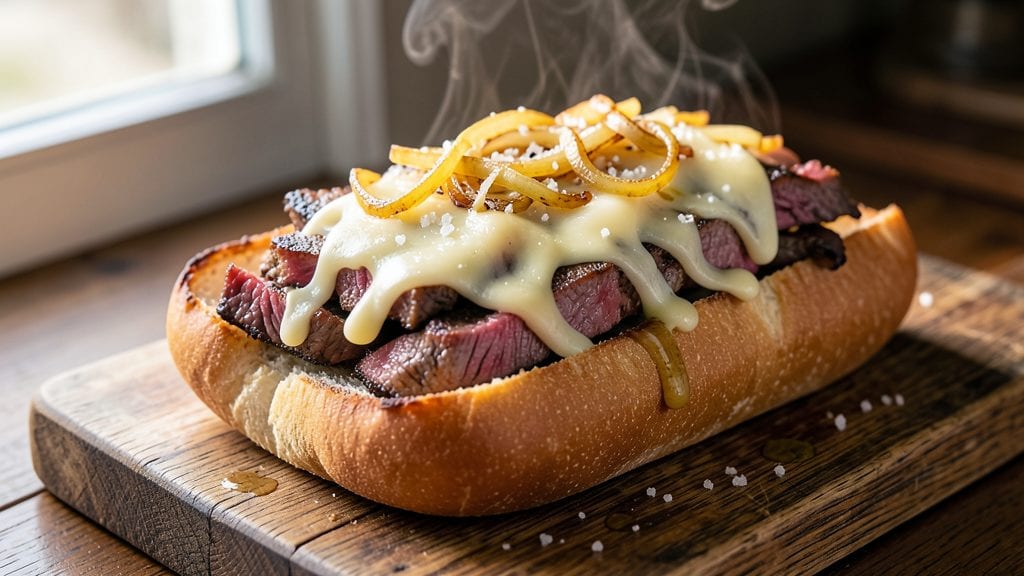
This traditional Philly cheese steak recipe delivers the iconic combination of thin-sliced ribeye, melted cheese, and toasted hoagie roll—just like you’d find at a classic Philadelphia deli. The secret lies in precise meat preparation and layering techniques that create that signature melt-in-your-mouth texture.
I’ve perfected this method after years of testing, ensuring every bite captures the authentic balance of savory, salty, and cheesy goodness.
What sets this recipe apart is the attention to detail in each component: ribeye sliced paper-thin for maximum tenderness, provolone cheese that melts perfectly without turning greasy, and caramelized onions that add depth.
The hoagie roll gets lightly toasted to hold up to the juicy filling, while optional toppings like green peppers or mushrooms add freshness. This isn’t just a sandwich—it’s a restaurant-quality masterpiece built to impress.
The process is straightforward but requires patience—thinly slicing the steak, cooking it to medium-rare, and assembling layers that stay hot and gooey. You’ll end up with a sandwich that’s crispy on the outside, creamy inside, and packed with flavor in every bite.
The aroma alone will have everyone at the table asking for seconds before you even take the first bite.
Serve this classic with a side of fries or pickles for the full Philly experience. Whether you’re recreating a favorite memory or introducing someone to this iconic dish, this recipe delivers authentic, no-compromise results. Let’s get started on creating your perfect Philly cheese steak.
Ingredients for traditional philly cheese steak
Thin-sliced ribeye, melted provolone, and toasted hoagie rolls—just like the iconic Philly deli sandwich.
| Ingredient | Amount | Notes |
|---|---|---|
| Ribeye Steak 🥩 | 1 ½ lb | Thinly sliced against grain |
| Provolone Cheese 🧀 | 8 oz | Sliced thinly, semi-soft variety |
| Yellow Onions 🧅 | 1 whole | Sliced into thin strips |
| Hoagie Rolls 🥖 | 4 whole | Freshly baked or lightly toasted |
| Extra-Virgin Olive Oil 🫒 | 2 tbsp | For slicing and cooking steak |
| Diamond Crystal Kosher Salt 🧂 | 1 ½ tsp | For seasoning steak |
| Freshly Ground Black Pepper 🌶️ | ½ tsp | For seasoning steak |
| Green Bell Pepper 🥒 | ½ cup | Optional, sliced thin |
| Mushrooms 🍄 | ½ cup | Optional, sliced thin |
| Garlic Cloves 🧄 | 2 cloves | Minced for caramelized onions |
| Yellow Mustard 🍯 | 1 tbsp | For roll spread |
| Butter 🧈 | 1 tbsp | For toasting rolls |
| Fresh Green Onions 🌿 | 2 whole | Sliced thin for garnish |
The ribeye is non-negotiable—USDA Choice or Prime gives you the best marbling for flavor. Ask your butcher to slice it paper-thin against the grain (about 1/8-inch thick) for that signature tenderness. I grab mine from Whole Foods or my local butcher shop—they know exactly how I like it. For onions, yellow or sweet onions work best, but red adds a nice color contrast. If you're feeling fancy, caramelize them with a splash of balsamic (trust me on the full-fat version). The provolone should be semi-soft, not too hard—it melts better and doesn't turn greasy. Di Bruno Bros or Boar's Head are my go-tos, but any quality provolone will do.
No ribeye? Sirloin works in a pinch, but it won't have the same marbling. Skip the bell peppers or mushrooms if you're in a hurry—they're just for freshness, not flavor. The rolls? Freshly baked is ideal, but if you're using store-bought, look for Italian-style hoagie rolls with a soft crust. Toast them in butter until golden—don't skip this step, it makes all the difference. For the onions, if you're short on time, quick-pickled red onions add a tangy kick. And if you're feeling experimental, swap provolone for white American cheese—it's what some classic delis use for that extra-melt factor.
Assemble the sandwiches right before serving—they reheat beautifully in a skillet or under the broiler for 2-3 minutes. Store leftovers in the fridge for up to 3 days, but honestly, they're best eaten fresh. For make-ahead prep, slice the steak and onions in advance, then refrigerate in separate containers. The rolls can be toasted and kept warm in a 200°F oven for up to 20 minutes. Freeze extras? Not recommended—the cheese gets rubbery when reheated.
Why You'll Love This Recipe
- No-Fuss Sear Time: I swear by the cast-iron skillet for this—just slice the ribeye thin, hit it with olive oil, and let the onions caramelize while you toast the rolls. Five minutes of hands-off magic, and suddenly you’re holding something that smells like a Philly dream.
- Melted Gold Layer: That gooey provolone isn’t just cheese—it’s the star. The moment it oozes over the steak and rolls, you’ll understand why this isn’t just a sandwich. (Between us, I’ve burned toast trying to wait for the perfect bite.)
- Tailgate to Tuesday: Honestly, this feeds a crowd or a solo night in equally well. Double the batch for game day, or wrap leftovers in foil for a lunch that still tastes like a victory. My daughter’s school friends have eaten it cold from the fridge—no judgment.
- Budget Flex: Ribeye might sound fancy, but you’re using less than a pound per sandwich, and provolone stretches farther than you’d think. Plus, onions and olive oil are the kind of ingredients that never go to waste. (Yes, even on a Tuesday night.)
Step-by-step instructions for traditional Philly cheese steak
Here's how to craft an authentic Philly cheese steak with tender ribeye, caramelized onions, and melted provolone.
Prepare the Steak and Seasonings
Begin by slicing the 1.5 lb ribeye steak thinly against the grain—about ¼-inch thick slices. This ensures maximum tenderness. Arrange the slices on a plate and season both sides generously with 1.5 tsp diamond crystal kosher salt and 0.5 tsp freshly ground black pepper. Let the seasoned steak rest for 10 minutes at room temperature before cooking. This resting period allows the salt to penetrate the meat evenly, enhancing flavor and preventing uneven cooking.
While the steak rests, thinly slice the 0.5 cup green bell pepper and 0.5 cup mushrooms if using, and set aside. These vegetables add texture and moisture to the sandwich but are optional in traditional Philly-style preparations. You'll cook them separately to avoid overcrowding the pan with the steak.
Cook the Steak in Olive Oil
Heat 2 tbsp extra-virgin olive oil in a large skillet over medium-high heat until shimmering. Add the seasoned ribeye steak slices in a single layer—don't overcrowd the pan. Cook for 1-2 minutes per side until the steak reaches medium-rare doneness (internal temperature 130-135°F). You'll know it's ready when the edges are lightly browned and the center remains slightly pink. Remove the steak from the pan and set aside on a warm plate.
Real talk: If the steak starts to stick, don't panic—just press down gently with a spatula for 5 seconds to release it. The key is to keep the heat steady and avoid moving the steak too soon. The goal is a perfect sear without overcooking.
Caramelize the Onions and Garlic
In the same skillet (no need to clean it—the fond adds flavor), reduce the heat to medium-low. Add the 1 whole yellow onion, sliced into thin strips, and the 2 minced garlic cloves. Cook for 8-10 minutes, stirring occasionally, until the onions soften and turn a deep golden brown. This caramelization process brings out their natural sweetness and creates a rich base for the sandwich.
If the onions start to brown too quickly, lower the heat slightly. You want them to cook slowly and develop that signature caramelized color. The garlic should infuse its aroma without burning—add it in the last 30 seconds of cooking to preserve its freshness.
Assemble the Philly Chease Steak Sandwiches
Lightly toast the 4 whole hoagie rolls with 1 tbsp butter in a separate skillet over medium heat for 1-2 minutes per side until golden brown. Spread 1 tbsp yellow mustard on the bottom half of each roll. This step adds a tangy contrast to the rich flavors of the steak and cheese.
Layer the steak slices onto the bottom half of each roll, followed by the caramelized onions. Top with 2 oz sliced provolone cheese per sandwich—using a semi-soft variety ensures it melts smoothly without becoming greasy. Place the top half of the roll on and press down gently to melt the cheese slightly. The residual heat from the steak and onions will finish melting the cheese as you eat.
Serve Immediately with Garnish
Cut each sandwich diagonally in half and serve immediately while the cheese is still gooey and the steak is warm. Garnish with 2 sliced fresh green onions for a pop of freshness and color. The contrast of the crispy roll, tender steak, caramelized onions, and melted cheese is what makes this sandwich legendary.
Here's the thing—Philly cheese steaks are best enjoyed fresh. The cheese continues to melt as you eat, creating that perfect balance of textures. If you're making these ahead of time, assemble the sandwiches without the cheese, wrap them in foil, and reheat in a skillet or oven until the cheese melts. But honestly? Nothing beats the first bite straight off the grill.
Pro Tips For Making Traditional Philly Cheese Steak
- CRANK THE HEAT: The onions need a screaming-hot pan—think 450°F if your stove allows it. I used to sweat this step, but blistering the onions in 3-4 minutes caramelizes their sugars fast, giving that deep, sweet crunch traditional Philly steaks crave. (Yes, even if it means your kitchen smells like a diner for 10 minutes.)
- SLICE THE PROVOLONE THIN: Skip the block cheese. Shave provolone paper-thin (⅛-inch max) so it melts into the steak, not pools on top. I learned this after watching my first batch turn into a greasy cheese log. A mandoline helps, but a sharp knife works—just stay patient.
- DON’T OVERSTEAM THE ROLLS: Hoagie rolls dry out fast when piled high. Toast them after assembling the sandwich—just 10 seconds under the broiler—so they stay soft but hold up to the juices. I used to skip this and ended up with soggy bread every time. (Your guests won’t notice the slight char, but they’ll taste the difference.)
- USE A MEAT THERMOMETER: Ribeye for Philly steaks should hit 130°F for medium-rare—any hotter and it turns chewy. I used to eyeball it and ruin perfectly good steaks. A $10 thermometer takes the guesswork out, and you’ll never overcook again. (Pro tip: Pull it 5°F early, then let it rest.)
Pro cooking tips for this recipe
Steak Slicing Secrets
The ribeye must be sliced paper-thin against the grain—about 1/8-inch thick—to achieve that signature tenderness. I ask my butcher to do this for me, but if you're slicing at home, use a sharp chef's knife and angle it at 45 degrees for clean, even slices.
Never slice with the grain, or you'll end up with tough, chewy bites. For even thickness, use a mandoline slicer with a ¼-inch blade—it's a game-changer for consistency. 🔪
Perfect Doneness
Philly cheese steak steak should be cooked to medium-rare (internal temp 130-135°F) for maximum tenderness. Overcooking turns it tough and dry—this isn't a New York strip! Use a meat thermometer for accuracy, and cook in batches if needed to avoid overcrowding the pan.
The sear should be just 1-2 minutes per side on medium-high heat, with a 10-minute rest before assembling. 🌡️
Onion Caramelization
Caramelizing the onions is where the magic happens—they should be deep golden brown, not just soft. Use yellow onions sliced into ¼-inch strips, and cook them low and slow over medium-low heat for 8-10 minutes.
Add a pinch of sugar (½ tsp) if they're browning too quickly, but avoid rushing—they need time to develop that sweet, jammy texture. The fond in the pan adds depth, so don't clean it out! 🧅
Cheese Melting Mastery
Provolone is non-negotiable for authentic Philly flavor, but the key is using semi-soft slices that melt smoothly without turning greasy. Place the cheese on top of the steak and onions, then close the sandwich—the residual heat from the steak will melt it perfectly.
For extra gooeyness, broil for 1-2 minutes in a skillet or oven, but watch closely to avoid burning. Cheez Whiz is a cheater's shortcut, but it lacks the depth of real provolone. 🧀
Roll Toasting Technique
Toast the hoagie rolls in 1 tbsp butter over medium heat until golden brown—this prevents sogginess and adds a crisp texture. Spread 1 tbsp yellow mustard on the bottom half before assembling, as it acts as a binder and adds a tangy contrast.
For extra authenticity, use Italian-style hoagie rolls with a soft, slightly chewy crust. If your rolls are too fresh, toast them longer to build structure. 🥖
Reheating Leftovers
If you must reheat, wrap the sandwiches in foil and heat in a 350°F oven for 5-7 minutes or in a skillet over medium heat for 2-3 minutes per side. The cheese will melt again, but it won't be as gooey as fresh.
For best results, assemble without cheese, refrigerate, then melt the cheese fresh when reheating. Leftovers keep for 3 days, but honestly, they're best eaten the same day. ⏰
Nutrition facts
Frequently asked questions
Why is thinly sliced meat essential for a Philly cheese steak?
The secret to that signature tender bite is slicing the ribeye paper-thin against the grain. This cuts through muscle fibers, creating a melt-in-your-mouth texture. Thick slices stay tough and chewy—ask your butcher to slice it 1/8-inch thick for perfect results. Never slice with the grain, or you'll lose all that juicy tenderness.
Can I substitute ribeye with another type of steak?
While ribeye is ideal for its marbling, sirloin or top round work in a pinch—but they lack the rich flavor. For best results, stick with ribeye or USDA Choice brisket. If using leaner cuts, cook them to medium doneness to prevent dryness, and add extra butter to the skillet while cooking.
What's the best way to melt the cheese without making it greasy?
Use semi-soft provolone (not hard or extra-sharp) and layer it on top of the steak and onions. The residual heat from the meat will melt it perfectly—no need for extra heat. For extra gooeyness, broil for just 1-2 minutes in a skillet, but watch closely to avoid burning. Avoid pre-shredded cheese, as it contains anti-caking agents that prevent proper melting.
How do I keep my hoagie rolls from getting soggy?
Toast the rolls in 1 tbsp butter over medium heat until golden brown before assembling. This creates a crisp barrier that prevents moisture from the steak and cheese from soaking in. Spread yellow mustard on the bottom half—it acts as a natural binder and adds a tangy contrast to the rich filling.
Can I make this ahead of time?
Assemble the sandwiches without cheese, wrap in foil, and refrigerate for up to 3 days. To serve, reheat in a skillet over medium heat for 2-3 minutes per side or broil for 1-2 minutes to melt fresh cheese. For best texture, assemble and eat immediately—leftovers won't be as gooey, but they're still delicious!