Soups & Stews
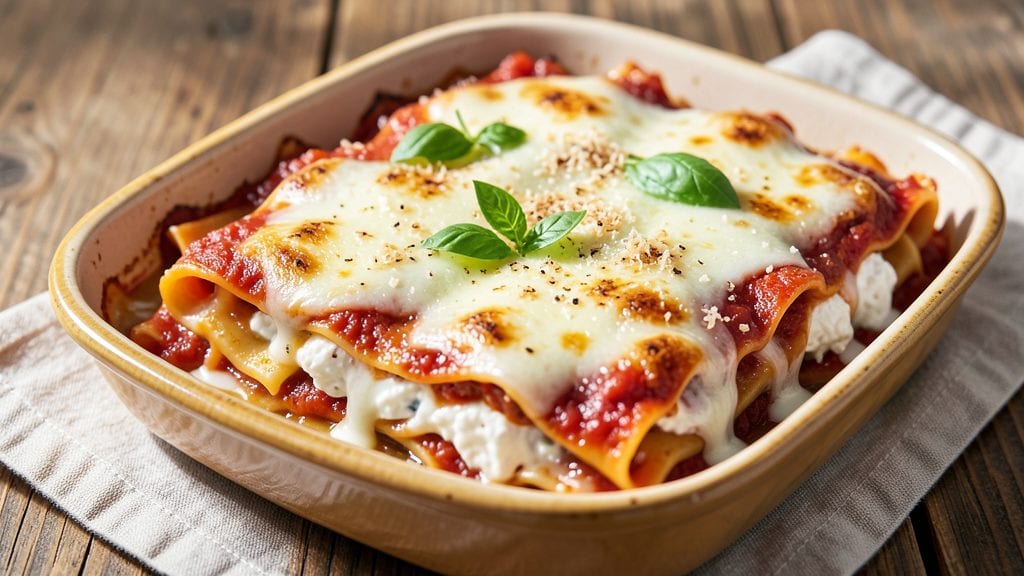
Mastering America's Test Kitchen cheese and tomato lasagna means achieving restaurant-quality layers without the guesswork. This recipe delivers a foolproof method that eliminates soggy noodles and ensures every bite is packed with rich tomato sauce and melted cheese.
After years of testing, we've perfected the technique for balanced flavors and precise layering.
The secret lies in pre-cooking the noodles just until al dente, then assembling the lasagna with a strategic order of sauces and cheeses. A simple béchamel sauce binds the layers while keeping the texture tender, and we use a combination of mozzarella, ricotta, and parmesan for depth.
Baking at the right temperature ensures even cooking without drying out the top layer.
What you'll end up with is lasagna that's rich, hearty, and perfectly proportioned—each layer distinct yet harmonious. The tomato sauce remains vibrant, the cheese melts smoothly, and the noodles stay al dente.
This is the kind of lasagna that satisfies even the most critical eaters, including those who swear they don't like lasagna.
Serve with a simple arugula salad or garlic bread to complete the meal. The recipe scales beautifully for gatherings, and leftovers reheat just as well as the first serving. Let's get started on this timeless classic that's guaranteed to impress.
Ingredients for america's test kitchen cheese and tomato lasagna
Foolproof lasagna layers start with these quality ingredients—no shortcuts needed for restaurant-style perfection.
| Ingredient | Amount | Notes |
|---|---|---|
| Lasagna Noodles 🍝 | 12 whole | No-boil or pre-cooked preferred |
| Tomato Sauce 🍅 | 3 cups | High-quality jarred or homemade |
| Ricotta Cheese 🧀 | 1 ½ cups | Whole milk, full-fat preferred |
| Mozzarella Cheese 🧀 | 2 cups | Part-skim for balanced flavor |
| Parmesan Cheese 🧀 | 1 cup | Freshly grated, block preferred |
| Heavy Cream 🥛 | 1 cup | Full-fat for rich béchamel |
| Unsalted Butter 🧈 | ½ cup | Cold, cut into small pieces |
| All-Purpose Flour 🌾 | ½ cup | For béchamel roux |
| Garlic Cloves 🧄 | 4 cloves | Minced for béchamel base |
| Nutmeg 🌿 | ¼ tsp | Freshly grated for depth |
| Salt 🧂 | 1 ½ tsp | Kosher or sea salt |
| Black Pepper 🌶️ | ½ tsp | Freshly cracked |
| Fresh Basil Leaves 🌿 | ¼ cup | Chopped for garnish |
The cheeses are non-negotiable. Parmigiano-Reggiano from a block—none of that pre-grated stuff—adds nutty depth. For ricotta, whole milk makes all the difference (part-skim gets watery). Mozzarella should be part-skim for flavor and melt, not the shredded kind from a can. Whole Foods or local cheesemongers carry the best selections, but don't stress if you can't find them—just look for vibrant color and no artificial additives. The lasagna noodles? No-boil or pre-cooked saves time, but if you must cook them, stop at al dente—they'll finish in the oven. Barilla or De Cecco are reliable brands for the right texture.
No ricotta? Cottage cheese blended smooth works in a pinch, though it lacks creaminess. Short on mozzarella? Provolone melts better than cheddar—just don't substitute sharp cheddar. The tomato sauce can be homemade (simmer crushed San Marzano tomatoes with garlic and basil), but Rao's or Muir Glen jarred sauces are perfectly fine. For the béchamel, European-style butter (like Plugrá) adds more flavor than American brands. No nutmeg? Skip it—it's subtle but important. The basil is purely decorative, but if you're feeling fancy, blanch and shock the leaves first to preserve color.
Assemble the lasagna immediately after mixing the ricotta and béchamel—don't let cheeses sit. Store leftovers covered tightly in the fridge for 4-5 days, though it reheats best when fresh. Freeze portions for up to 3 months by wrapping tightly in foil before plastic. For gatherings, double the recipe—it scales perfectly. The key to reheating? Low oven (325°F) with foil until bubbly, then broil briefly for a golden top. Leftovers taste even better the next day—proof that patience pays off in lasagna.
Why You'll Love This Recipe
- I’ll be real: this tastes like a fancy restaurant dish, but the ingredients are all pantry staples. A block of mozzarella, a tub of ricotta, and a jar of sauce stretch far, and the noodles? Cheap as chips. It’s the kind of meal that makes you feel like you’re treating yourself without breaking the bank.
- No-Fuss Assembly: I swear by this lasagna because it’s the rare recipe that doesn’t require a PhD in layering. Just noodles, sauce, ricotta, and cheese—no fancy techniques, no stress. The ricotta stays creamy, the mozzarella melts just right, and the parmesan adds that perfect salty crunch without overpowering.
- Layered Magic: Between us, this is the only lasagna where every bite has that perfect combo: tangy tomato sauce, velvety ricotta, and gooey mozzarella all hugging those al dente noodles. The ATK method ensures the ricotta doesn’t turn to rubber, and the cheese doesn’t slide off the plate—just pure, satisfying texture in every forkful.
- Weeknight + Potluck Hero: Honestly, this is my go-to for both lazy Tuesdays and Sunday dinners. It reheats beautifully (yes, even the next day), and the portions are big enough to feed a crowd but not so massive I’m stuck with leftovers for a week. My sister’s even brought it to holiday gatherings—always gets raves.
Step-by-step instructions for america's Test Kitchen cheese and tomato lasagna
Layering technique matters—follow these precise steps for lasagna that delivers melt-in-your-mouth texture and perfect flavor balance.
Prepare the Béchamel Sauce
In a medium saucepan, melt the 0.5 cup unsalted butter over medium heat until completely liquid but not browned. Add the 0.5 cup all-purpose flour all at once and whisk vigorously for 1-2 minutes until the mixture forms a smooth, pale roux with no floury taste. This step is critical—don't rush it or the sauce will develop a raw flour flavor.
Gradually whisk in the 1 cup heavy cream, adding it slowly to prevent lumps from forming. Cook for 3-4 minutes until the mixture thickens enough to coat the back of a spoon. Stir in the 4 cloves minced garlic cloves, 0.25 tsp nutmeg, 1.5 tsp salt, and 0.5 tsp black pepper. Reduce heat to low and let the sauce simmer gently for 5 minutes to develop full flavor. Remove from heat and set aside—this sauce should be thick but still pourable, not gluey.
Assemble the Lasagna Layers
Preheat your oven to 375°F. Grease a 9x13-inch baking dish with a bit of olive oil or butter to prevent sticking. Begin with a thin layer of 1 cup tomato sauce spread evenly on the bottom of the dish. This creates a flavorful base that prevents the noodles from sticking directly to the pan.
Add 4 lasagna noodles (uncooked if using no-boil) in a single layer, slightly overlapping if needed to cover the bottom completely. Spread 1/3 of the ricotta cheese evenly over the noodles, then sprinkle 1/3 of the mozzarella cheese and 1/4 cup parmesan cheese over the ricotta. Repeat this layering sequence twice more, ending with noodles after the third ricotta layer. The final layer should be noodles topped with remaining mozzarella and parmesan.
Add Sauce and Bake to Perfection
Pour the remaining 2 cups tomato sauce evenly over the top layer of noodles, spreading it to the edges. Then, ladle the béchamel sauce evenly over the tomato sauce, using about 1/3 cup per layer (total 1 cup). The sauce should cover the noodles completely but not pool excessively—this ensures proper browning without soggy layers.
Cover the baking dish tightly with aluminum foil and bake for 25 minutes. Remove the foil and bake for an additional 20-25 minutes until the top is deep golden brown and bubbly. The edges should be slightly crisp, and the cheese should be melted and bubbling. A toothpick inserted near the center should come out clean with just a few cheese strands.
Rest and Serve
Remove the lasagna from the oven and let it rest for 15-20 minutes before slicing. This resting period allows the layers to set and prevents the filling from sliding out when you cut into it. The internal temperature should reach 170°F at this point, ensuring all layers are fully heated through.
Garnish with 0.25 cup chopped fresh basil leaves just before serving. The basil adds a bright contrast to the rich, cheesy layers and signals that the lasagna is ready to be enjoyed. Cut into 6 equal squares and serve immediately while the cheese is still warm and stretchy. Each bite should deliver perfect texture contrast—al dente noodles, creamy béchamel, and rich tomato sauce in every layer.
Pro Tips For Making America'S Test Kitchen Cheese And Tomato Lasagna
- Preheat That Pan: America’s Test Kitchen swears by a hot oven—425°F (218°C)—but don’t just set it and forget it. Slide a baking sheet in 15 minutes early so the dish starts cooking in a screaming-hot environment. I learned this the hard way after my first lasagna came out soggy because the oven took forever to heat up. Trust me, that extra prep time saves you from a gummy mess.
- Salt the Ricotta: The ricotta in this recipe is your lasagna’s unsung hero, and it needs flavor. Mix in ½ teaspoon of salt per 15 ounces of ricotta (yes, even if it’s labeled "low-sodium"—manufacturers lie). I was skeptical until I tried it: the cheese layer actually tastes like part of the dish, not just filler.
- Layer Like a Pro: Spread the sauce thin—about ¼ inch per layer—so it doesn’t pool at the bottom and turn your noodles into a soggy swamp. And for the love of cheese, don’t overfill the pan. The ATK recipe builds layers that look like a tower, but if yours wobbles, it’ll leak like a sieve. Fill it to about ¾ full, then press down gently with a spatula.
- Cover It Early: The first 20 minutes in the oven are critical. Tightly wrap the lasagna in foil immediately after the initial bake—this traps steam and guarantees those noodles cook through without drying out. I used to wait, thinking the sauce needed to "brown," but that’s how you end up with a brick instead of a lasagna. Foil first, then uncover for the final 10 minutes if you want color.
Best sauces and condiments for america's test kitchen cheese and tomato lasagna
Tomato Sauce Upgrades
Elevate your tomato sauce by adding 1 tbsp tomato paste to the jarred sauce and simmering with 2 crushed garlic cloves and 1 tsp dried oregano for 10 minutes. This deepens the flavor without altering the texture.
For a smoky twist, stir in ½ tsp smoked paprika or a pinch of crushed red pepper flakes. I also love adding ½ cup finely chopped sun-dried tomatoes to the sauce for concentrated sweetness.
Béchamel Variations
For a richer béchamel, replace ¼ cup of the heavy cream with ¼ cup whole milk and whisk in 1 oz grated Gruyère cheese while warming. This adds nutty depth that pairs beautifully with the tomato sauce.
If you're watching fat content, use ½ cup low-fat milk instead of cream, but expect a slightly lighter texture. A splash of white wine (¼ cup) deglazed from the pan adds brightness.
Cheese Layer Tricks
To prevent a rubbery top layer, mix ½ cup of the ricotta with ¼ cup grated parmesan and spread it as the final layer before adding tomato sauce. This creates a creamy barrier that protects the cheese from over-browning.
For extra stretch, fold ½ cup shredded fontina cheese into the ricotta mixture—it melts like a dream. Avoid pre-shredded cheeses; block cheese melts more evenly.
Herb and Umami Boosters
Infuse your tomato sauce with 1 bay leaf while simmering, then remove before layering. For umami depth, stir in 1 tbsp fish sauce (like Red Boat) or ½ tsp Worcestershire sauce—trust me, it enhances without overpowering.
Fresh herbs like thinly sliced basil or parsley added to the béchamel just before baking brighten the dish. A pinch of ground white pepper in the ricotta adds subtle complexity.
Finishing Touches
Drizzle the baked lasagna with 2 tbsp olive oil before serving to add richness and shine. For a crispy top, sprinkle ¼ cup breadcrumbs mixed with 1 tbsp grated parmesan on the final layer before baking.
A final garnish of flaky sea salt and freshly cracked black pepper elevates the presentation. If you're feeling adventurous, add a dollop of balsamic glaze alongside each serving for tangy contrast.
Sauce Storage Hacks
Store unused tomato sauce in glass jars with a splash of water to cover the surface—this prevents oxidation and keeps flavors fresh for up to 3 months in the fridge.
For béchamel, cool it completely before transferring to an airtight container and press plastic wrap directly onto the surface to minimize skin formation. Freeze sauces in 1-cup portions for easy thawing—simmer after thawing to restore texture. 💡
Nutrition facts
Frequently asked questions
Why does America's Test Kitchen use béchamel in lasagna?
The béchamel creates a creamy, velvety texture that binds the layers while preventing sogginess. Unlike traditional ricotta-only mixtures, it adds richness and helps distribute moisture evenly. The nutmeg and garlic in the sauce also complement the tomato sauce beautifully, creating a balanced flavor profile that stands out in every bite.
Can I substitute no-boil noodles for regular lasagna noodles?
Yes, but with a key adjustment: if using regular noodles, cook them 1 minute less than package instructions (al dente) and layer them raw. The residual heat from the oven will finish cooking them perfectly. No-boil noodles are ideal for this recipe because they absorb less moisture, keeping the layers distinct and preventing a mushy texture.
How do I fix a lasagna that's too dry after baking?
If your lasagna emerges dry, try this: cover it with foil and bake at 350°F for 10-15 minutes> with 2-3 tbsp warm water or broth> sprinkled over the top. The steam will restore moisture without making the layers soggy. For future attempts, reduce baking time slightly (aim for 45-50 minutes total) and use more tomato sauce between layers.
What's the best way to reheat leftovers?
For perfect reheating, cover the lasagna with foil and bake at 325°F for 20-25 minutes> until heated through. Avoid microwaving—it creates a rubbery texture. If using the oven, add 1 tbsp water> to the pan to prevent drying. Leftovers actually improve the next day as flavors meld together!
Can I make this lasagna ahead of time?
Assemble the lasagna up to 24 hours> ahead and refrigerate uncovered. Before baking, remove from the fridge 1 hour> before putting it in the oven (no need to thaw if frozen). For freezing, bake completely, cool, wrap tightly in foil, then plastic, and freeze for up to 3 months. Thaw overnight in the fridge before reheating.