
Main Courses
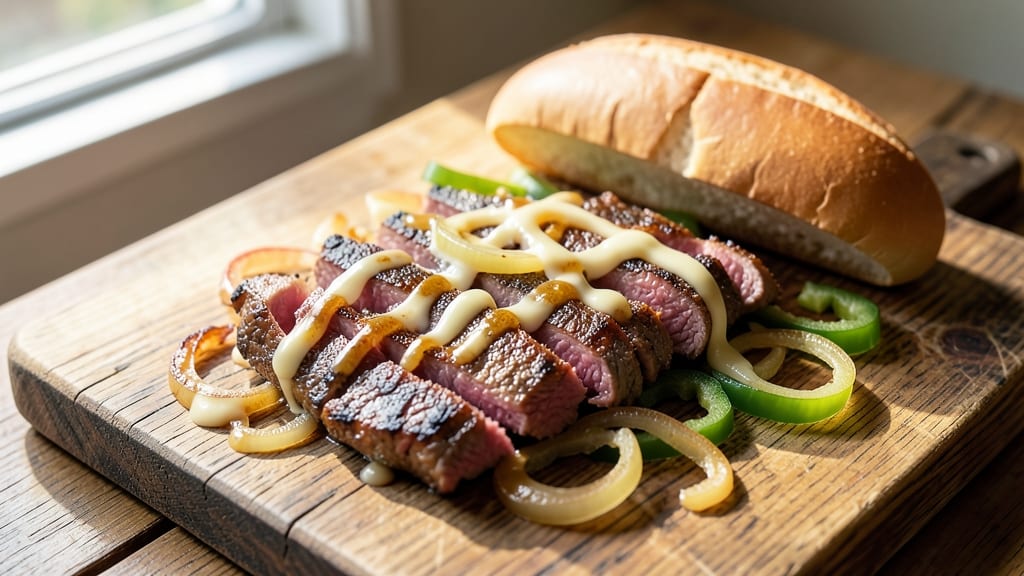
This classic Philly cheese steak recipe delivers the iconic combination of thin-sliced ribeye, melted provolone, and toasted hoagie rolls—just like the original from Reading Terminal Market.
The secret lies in perfectly cooked steak that stays tender yet develops a caramelized crust, while the cheese melts into a creamy, gooey blanket over every bite. I've refined this recipe over years of testing, ensuring the balance of textures and flavors that makes this sandwich legendary.
What sets this version apart is the technique for slicing the steak paper-thin—critical for even cooking—and the proper cheese selection, where provolone delivers that signature melt without overpowering the beef. The hoagie rolls are toasted just enough to add structure without burning, creating the perfect vessel for this hearty sandwich.
Every component comes together in a way that captures the soul of Philadelphia's most famous creation.
By following these steps, you'll achieve a Philly cheese steak with crispy, caramelized edges on the steak, perfectly melted cheese that stretches with each bite, and a roll that holds up to the generous fillings without falling apart.
The aroma alone will have everyone gathering around your kitchen—this is comfort food at its finest, with the right balance of richness and simplicity.
Serve with classic sides like crispy fries or a tangy coleslaw to complete the meal. This recipe stays true to tradition while making it accessible for home cooks—no special equipment required, just attention to the details that make all the difference.
Let's get started on creating your perfect Philly cheese steak.
Ingredients for classic philly cheese steak
Thin-sliced ribeye, perfectly melted provolone, and toasted hoagie rolls—this is the classic Philly cheese steak lineup.
| Ingredient | Amount | Notes |
|---|---|---|
| Ribeye Steak 🥩 | 1 ½ lb | Thinly sliced against grain |
| Provolone Cheese 🧀 | 8 oz | Sliced 1/4-inch thick |
| Hoagie Rolls 🥖 | 4 whole | Classic Philadelphia-style |
| Yellow Onion 🧅 | 1 whole | Thinly sliced |
| Green Bell Pepper 🌶️ | 1 whole | Thinly sliced |
| Unsalted Butter 🧈 | 2 tbsp | For cooking steak |
| Olive Oil 🫒 | 1 tbsp | For toasting rolls |
| Garlic Cloves 🧄 | 2 cloves | Minced for rolls |
| Kosher Salt 🧂 | 1 ½ tsp | For seasoning steak |
| Ground Black Pepper 🌶️ | ½ tsp | Freshly ground |
| Mayonnaise 🥛 | 1 tbsp | Optional for assembly |
| Yellow Mustard 🍯 | 1 tbsp | Optional for assembly |
The ribeye is non-negotiable for authentic flavor—look for well-marbled cuts at your local butcher or Whole Foods. Slicing it paper-thin against the grain is key; Costco sells pre-sliced ribeye if you're short on time. For provolone, imported Italian varieties melt best—avoid the pre-shredded stuff. The hoagie rolls should be soft but sturdy; Otto's Bakery (from Reading Terminal Market) makes the best, but local bakeries often carry good alternatives. If you can't find them, any Italian-style sandwich roll will work in a pinch.
No olive oil? Butter works just as well for toasting the rolls. Short on green bell pepper? Red or yellow peppers give a slightly different flavor but work fine. For the cheese, mozzarella can replace up to half the provolone, though it won't be as authentic. The mayonnaise and mustard are optional but help bind everything together—Duke's mayo is a Philly classic if you want to go all out. If you're making extra sandwiches, double the steak and cheese—they reheat beautifully. Just keep the rolls separate until serving to maintain their toasted texture.
Store leftover steak in an airtight container for 3-4 days—it reheats perfectly in a skillet with a splash of water. The provolone keeps 2 weeks wrapped in parchment. For the rolls, freeze them unassembled for up to 1 month—toast straight from frozen. Assemble sandwiches just before serving to keep the rolls from getting soggy. This recipe makes 4 sandwiches, but the leftovers are even better the next day—trust me, the flavors meld overnight.
Why You'll Love This Recipe
- I’ll be real: ribeye isn’t cheap, but this recipe stretches it like nobody’s business. Thinly sliced, it feeds two with serious leftovers, and the provolone and veggies bulk it up without breaking the bank. Plus, the hoagie rolls? Store-bought, no shame. It’s the little luxuries—like that perfect char on the steak—that make it feel fancy.
- No Chopping, No Stress: I swear by this recipe because it’s the only Philly cheesesteak where I can skip the knife work. Slice the onion and bell pepper once at the start, toss them in a pan with the steak, and let the heat do the rest. My hands stay clean, my kids stop whining about "too much cutting," and the flavors still sing.
- Melty Magic Happens: That moment when the provolone stretches over the ribeye, crisping just enough to hold its shape but still gooey inside? It’s the reason I make this at least once a week. The onions caramelize right in the pan with the steak, so you’re not left with sad, watery scraps—just deep, savory layers that make every bite taste like a hug from a Philly diner.
- Tailgate or Tuesday: Between us, this is my secret weapon for game days and lazy nights. Wrap it up in a hoagie, and it’s a stadium-worthy snack. Double the batch, and those leftovers? Just as good cold the next day—perfect for a quick lunch or feeding a crowd without stress. (Yes, even on a Tuesday night.)
Step-by-step instructions for classic Philly cheese steak
Here's how to recreate the iconic sandwich with perfectly cooked steak and melty provolone.
Season and Cook the Ribeye Steak
Pat the 1.5 lb ribeye steak dry with paper towels to ensure a good sear. Season both sides generously with 1.5 teaspoons kosher salt and 0.5 teaspoon ground black pepper, pressing the seasoning into the meat so it adheres evenly. Let it sit at room temperature for 15 minutes while you prepare the cooking surface.
Heat a large skillet over medium-high heat and add 2 tablespoons unsalted butter. Once the butter melts and starts foaming, add the steak. Cook for 3-4 minutes per side until it reaches medium-rare (internal temperature 130-135°F). Remove the steak from the pan and let it rest for 5 minutes before thinly slicing it against the grain. This resting period ensures juicy steak that won't fall apart when assembled.
Sauté the Vegetables
In the same skillet (no need to clean it—the browned bits add flavor), add the thinly sliced yellow onion and thinly sliced green bell pepper. Cook over medium heat for 5-6 minutes, stirring occasionally, until the onions soften and the peppers become slightly charred around the edges. This step builds the classic Philly flavor profile while keeping the vegetables tender-crisp.
Remove the vegetables from the skillet and set them aside. You'll use them to layer between the steak and cheese in your sandwiches. The residual fat in the pan will help create a flavorful base for your rolls.
Toast the Hoagie Rolls
Heat 1 tablespoon olive oil in a separate skillet over medium heat. Add the 4 whole hoagie rolls and toast them for 1-2 minutes per side until they develop a golden-brown crust. While toasting, add the 2 minced garlic cloves to the oil in the pan to infuse the rolls with subtle garlic flavor. This step is crucial for achieving that perfect toasted texture that holds up to the juicy filling.
Cut each roll in half lengthwise, creating 8 halves. Keep them warm while you assemble the sandwiches. The toasted rolls will provide the perfect structure to hold all the delicious components together.
Assemble the Classic Philly Cheese Steaks
On the bottom half of each toasted roll, spread 1 teaspoon mayonnaise and 1 teaspoon yellow mustard (if using). Layer half of the sliced ribeye steak, half of the sautéed vegetables, and half of the 8 oz sliced provolone cheese (about 2 ounces per sandwich). Repeat the layering on the remaining roll halves, pressing down gently to help the cheese melt.
To melt the cheese, cover each assembled sandwich with aluminum foil and place them in a preheated oven at 350°F for 3-5 minutes until the cheese is fully melted and bubbly. This gentle heating ensures the cheese melts evenly without burning the bread. Remove from the oven and let rest for 2 minutes before serving to allow the sandwiches to set slightly.
Serve Immediately
Slice each sandwich diagonally if desired, and serve immediately while the steak is still warm and the cheese remains gooey. The combination of tender steak, sweet sautéed peppers and onions, and melted provolone creates the perfect balance of textures and flavors that defines a classic Philly cheese steak.
For the best experience, serve with a side of crispy fries or a simple green salad. The sandwiches are best enjoyed fresh from the oven when all the components are at their peak temperature and texture.
Pro Tips For Making Classic Philly Cheese Steak
- SEAR THE STEAK HOT: Cut the ribeye against the grain into ½-inch strips—thin enough to cook fast, thick enough to hold together. Throw it in a screaming-hot skillet with just a splash of oil (no crowding!) and let it blister for 30 seconds per side before pulling it out. Overcooking turns it tough; undercooking makes it sad. Aim for 130°F internal temp—it’ll finish in the sandwich.
- CHAR THE ONIONS LOW: Slice the yellow onion and bell pepper into ¼-inch strips, then toss them in the same skillet after the steak comes out—medium-low heat only. Let them sweat for 8-10 minutes until deep golden, not crispy. High heat burns them before they soften; low heat builds sweetness. Stir occasionally, or they’ll stick like glue.
- SALT THE BREAD LIBERALLY: Spritz the hoagie roll with water before toasting—just a quick spray inside and out. Then hit it with flaky salt while it’s still warm. The steam + salt = crispy crust without buttery mess. I used to skip this; now I can’t imagine a Philly cheesesteak without that salty crunch.
- MELT THE CHEESE RIGHT: Shred the provolone thin—too thick, and it won’t melt evenly. Layer it on the steak after the onions go back in the pan, then cover the whole sandwich with foil for 90 seconds. The residual heat melts it perfectly; no microwave cheesiness. If you’re in a rush, just fold the foil tightly—it traps the steam like a dream.
Essential equipment for perfect results
Skillet Essentials
Your 10-inch cast iron skillet is the MVP for this recipe—it retains heat perfectly and develops those flavorful browned bits called fond. I use a Lodge Pre-Seasoned Cast Iron Skillet for its durable seasoning, but any well-seasoned cast iron works.
For non-stick convenience, a Mauviel M'Cook M35 stainless steel skillet with a copper core also delivers excellent heat distribution. 🔥
Knife Precision
Thinly slicing the ribeye against the grain is non-negotiable for texture. I rely on my Victorinox Fibrox Pro 8-inch chef's knife for its razor-sharp edge retention. For the onions and peppers, a Wüsthof Classic 8-inch handles the job with ease.
Keep your knives sharp—dull blades crush meat instead of cleanly slicing it. A Sharpie knife sharpener is my go-to for quick maintenance between uses.
Cheese Tools
For the provolone, I recommend using a sharp serrated knife (like a Mercer Culinary Genesis) to slice the cheese into ¼-inch thick pieces. This thickness ensures even melting without burning.
Store your cheese in the original packaging until ready to use, then transfer to a parchment-lined plate to prevent sticking. Avoid pre-shredded cheese—the anti-caking agents prevent proper melting.
Roll Toasting Setup
A lightweight stainless steel toaster (like the Oster Classic Toaster) works perfectly for batch toasting rolls, but a clean skillet with 1 tablespoon olive oil is just as effective. For garlic infusion, I crush 2 cloves with the flat side of my knife before adding them to the oil.
This releases more flavor into the hot oil. Keep toasted rolls warm in a 200°F oven while assembling sandwiches to maintain freshness.
Assembly Station
Gather your components on a large cutting board or marble slab for easy assembly. I use aluminum foil from a Reynolds Wrap brand for melting the cheese—it's sturdy enough to handle hot sandwiches.
A small offset spatula helps spread the mayonnaise and mustard evenly on the rolls. For serving, I recommend wooden cutting boards to keep sandwiches warm while slicing.
Optional Extras
For the hot sauce (like Crystal or Texas Pete), I keep a small glass squeeze bottle on hand for easy drizzling at the table. If you're adding extra toppings like jalapeños or mushrooms, pre-cook them in the same skillet as the onions and peppers.
A fine-mesh strainer helps drain any excess liquid before using them in the sandwiches. These tools ensure your Philly cheese steak stays authentic while keeping prep organized. 💡
Nutrition facts
Frequently asked questions
What's the best cut of beef for a Philly cheese steak?
For authentic flavor, use ribeye—it's the traditional choice with rich marbling. Sirloin works too but has less fat, so it can dry out faster. Always slice it paper-thin against the grain for maximum tenderness.
Can I make this sandwich ahead of time?
Assemble the sandwiches (without cheese), wrap them in foil, and refrigerate for up to 24 hours. When ready to serve, toast the rolls and melt the cheese fresh. For leftovers, reheat in a skillet with a splash of water to restore moisture. The flavors actually improve overnight!
Why does my cheese not melt properly?
Pre-shredded cheese contains anti-caking agents that prevent proper melting. Always use block provolone sliced ¼-inch thick. For even melting, cover sandwiches with foil and warm in a 350°F oven for 3-5 minutes. Never microwave—it makes the bread soggy.
What's the secret to crispy toasted rolls?
Toast the rolls in a clean skillet with 1 tablespoon olive oil over medium heat for 1-2 minutes per side until golden brown. Add minced garlic to the oil for extra flavor. Keep them warm in a 200°F oven while assembling to prevent sogginess. The key is even browning—not burning!
Can I substitute mozzarella for provolone?
You can use mozzarella (especially low-moisture), but it won't be as authentic. Mozzarella melts faster and can make the sandwich too soft. For best results, use 50% provolone and 50% mozzarella—this gives you the right balance of melt and flavor. The provolone's tang is what makes this sandwich special!